Borrowed Leverage: How a Public Library Card Quietly Upgrades the Online Study Routine
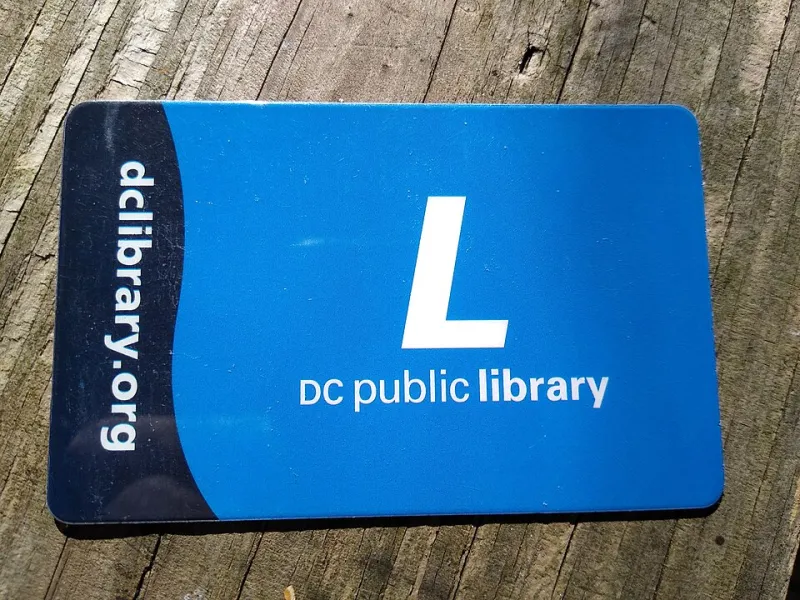
Photo: Photo by T. Carter Ross; card design and logo, DC Public Library, Public domain, via Wikimedia Commons
Online learning is often marketed as convenient and flexible, but the hidden costs add up: subscriptions, research databases, exam preparation, printing, and a reliable place to study. For many students in the United States, a public library card is an underused form of academic leverage. It will not replace a well-designed course, but it can quietly strengthen the research, preparation, and discipline that online study requires.
The challenge is that library resources vary widely by city, county, and state. A resource advertised in one system may be unavailable in another. The smart approach is not to assume access, but to verify it, build a routine around what is actually available, and record what you learn.
More than books on a shelf
Modern public libraries function as research and learning centers. Many provide remote access to academic and trade databases, language-learning platforms, test-preparation tools, business directories, genealogy archives, and digital newspapers. Some offer maker spaces with audio and video equipment, 3D printers, or design software. Others host writing groups, technology classes, citizenship preparation, and small-business counseling.
For an online learner, the most valuable resources are often the least visible. A student writing a research paper may find peer-reviewed articles through a library database that would otherwise require an expensive subscription. A learner preparing for a certification exam may find practice tests through a library-funded platform. A student without a quiet home office may find study rooms, reliable Wi-Fi, and printing at a branch.
First step: verify your access
Do not rely on a general web search. Start with your library system's website and look for a page labeled databases, digital resources, research, or e-learning. Then confirm three things: whether the resource is available remotely, whether it requires a library card number, and whether there are usage limits.
If the website is unclear, contact the reference desk. A librarian can tell you which databases are licensed for your card, whether you need to be inside a branch, and whether interlibrary loan is available for materials your system does not own. This step takes twenty minutes and can save months of unnecessary spending.
Build a low-cost research routine
A library card becomes useful when it is attached to a repeatable routine. Consider a weekly cadence that fits around work and family obligations:
- Monday: Write down one research question or study problem for the week.
- Tuesday: Search one library database and save three relevant sources.
- Wednesday: Ask a librarian one specific question by chat, email, or phone.
- Thursday: Read and annotate the strongest source; add notes to a learning log.
- Friday: Write a short synthesis of what changed in your understanding.
This cadence is modest, but it prevents the common online-learning pattern of collecting resources without using them. It also creates a record of effort that can be reviewed later.
The librarian as research consultant
Many students treat librarians as gatekeepers to books. In practice, reference librarians are trained in search strategy, source evaluation, and information organization. They can help refine a topic, identify the right database, locate statistics, and distinguish scholarly sources from marketing material.
Ask specific questions. Instead of asking whether the library has information on healthcare management, ask which database covers hospital administration journals and whether it supports full-text access. Instead of asking for help with citations, ask which citation manager the library supports and whether there is a workshop this month. Specific questions produce specific help.
Maker spaces and practical tools
Some library systems offer equipment that would be costly to purchase: cameras, microphones, podcasting kits, sewing machines, laser cutters, or 3D printers. For online learners in design, communications, education, or entrepreneurship, these tools can support portfolio projects and capstones. Availability is uneven, so check reservation policies, training requirements, and material fees before planning a project around them.
A caution about access and terms
Library resources are not universal. Licensing agreements vary, some databases are available only inside a branch, and remote access may be restricted to residents of a specific service area. Always read the terms. Do not share login credentials. Do not assume that a resource found through a library is automatically licensed for commercial use. If a project involves publishing or client work, confirm permissions with the library and the database provider.
Track what you learn
Online learning can feel ephemeral. A simple learning log restores a sense of progress. Create a document with columns for date, question, source, key insight, and next step. At the end of each month, review the log and identify one skill you practiced and one question still unresolved. This practice turns scattered library use into a coherent study record.
A public library card is not a shortcut to a degree. It is a quiet piece of infrastructure that supports the habits good online learning requires: curiosity, verification, persistence, and reflection. Used deliberately, it can lower costs and raise the quality of the work a student produces.