Learning Backward: Why Other People's Mistakes Are Your Greatest Classroom
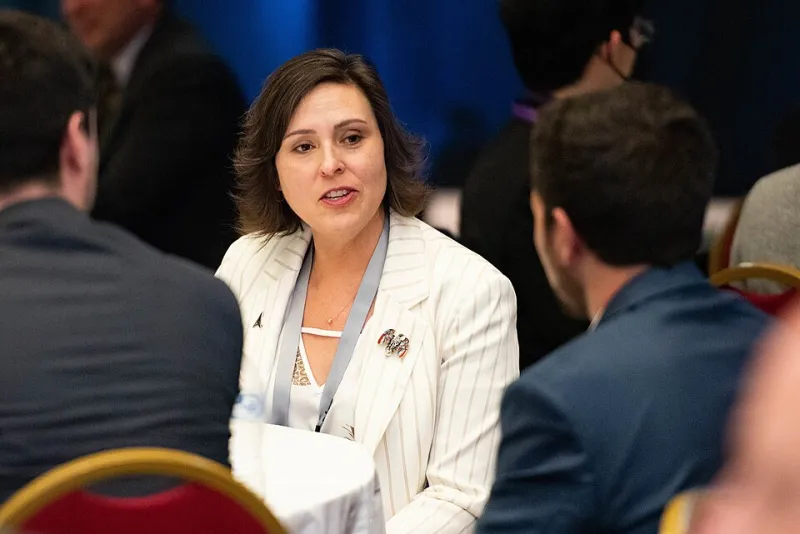
Photo: U.S. Space Force photo by David Grim, Public domain, via Wikimedia Commons
There is a peculiar assumption embedded in the American ideal of self-reliance: that the lessons we earn through personal struggle are inherently more valuable than those we receive from others. It is a romantic notion, and it is also, in many professional contexts, deeply inefficient. The most accomplished individuals in medicine, law, engineering, and business did not simply accumulate their own failures over time. They studied the failures of those who came before them — deliberately, systematically, and with the same rigor one might apply to a textbook.
This is the mentor paradox: the fastest route to expertise often runs not through your own experience, but through someone else's.
The Psychology of Learning from Vicarious Experience
Cognitive psychologists have long recognized that human beings possess a remarkable capacity for what is called observational learning — the ability to absorb, process, and internalize lessons from events we did not personally experience. Pioneered in part by the research of Albert Bandura in the 1970s, this framework suggests that watching another person navigate a challenge activates many of the same neural processes involved in direct experience.
What makes this particularly relevant to professional development is the concept of emotional distance. When you fail at something yourself, the emotional weight of that failure can distort your analysis of it. Shame, defensiveness, and ego all interfere with clear-eyed reflection. When you study someone else's failure, however, you can examine it with a degree of clinical objectivity that is genuinely difficult to achieve in the aftermath of your own setback.
A mentor who shares the story of a failed product launch, a mismanaged team, or a strategic miscalculation is handing you something extraordinarily valuable: the lesson without the scar tissue.
Case Studies in Compressed Career Growth
Consider the trajectory of professionals who have deliberately sought out mentors willing to discuss their missteps openly. A mid-career marketing professional who enrolled in an online business strategy program recounted how her faculty mentor — a former retail executive — spent an entire semester dissecting the decisions that led to a major brand collapse early in his career. Rather than presenting polished case studies of corporate triumph, he walked through the logic errors, the overconfidence, and the data he had ignored. Within eighteen months of completing the program, she had restructured her company's digital strategy and avoided a nearly identical set of circumstances that had derailed a competitor.
In another instance, a software developer enrolled in an online project management certification described how a peer learning cohort — composed largely of professionals already working in the field — became his most valuable educational resource. Not because they shared their successes, but because they were willing to discuss the projects that had gone sideways: the timelines that collapsed, the stakeholder communications that failed, the technical decisions that cost their teams weeks of rework. These conversations, structured around honest post-mortems rather than victory narratives, gave him a practical vocabulary for risk that no textbook had provided.
These are not isolated anecdotes. They reflect a consistent pattern: professionals who actively seek out failure narratives from experienced mentors develop situational awareness far faster than those who rely exclusively on formal instruction or their own incremental experience.
Why Success Stories Can Actually Mislead You
This is worth examining carefully, because the instinct to learn from success is entirely natural. We are drawn to stories of achievement. Business bestseller lists are dominated by accounts of visionary founders and decisive executives. Commencement addresses celebrate perseverance rewarded.
But success stories carry a structural problem known in statistics as survivorship bias. When we study only the outcomes that worked, we unconsciously build a mental model that omits the full range of variables — including the many paths that led nowhere. The executive who attributes her success to bold risk-taking may be describing a strategy that also produced a dozen invisible failures she never mentions, or simply one that happened to align with favorable market conditions that no longer exist.
Failure narratives, by contrast, are far more instructive precisely because they illuminate the decision points where things diverged from the intended outcome. They reveal the warning signs that were dismissed, the advice that was ignored, and the assumptions that proved unfounded.
Building Mentorship Relationships in Online and Hybrid Learning Environments
For students engaged in online or hybrid academic programs, the challenge of finding mentors who will speak candidly about failure requires intentionality. The following framework offers a structured approach.
Seek mentors who have changed direction. Professionals who have pivoted careers, recovered from setbacks, or publicly acknowledged a significant professional failure are often more willing — and more able — to discuss the lessons embedded in those experiences. Look for instructors, alumni, and industry professionals whose biographies include visible inflection points.
Ask specific questions, not general ones. Rather than asking a mentor what advice they would give their younger self, ask them to describe a specific decision they made that they would make differently today, and why. Specificity invites candor. Generality invites platitudes.
Engage your peer network as a learning laboratory. Online learning communities, discussion forums, and cohort-based programs create natural environments for peer mentorship. Establish norms within your network that treat honest professional post-mortems as a form of intellectual contribution, not a confession of weakness.
Document what you learn. Treat the failure narratives you collect from mentors and peers as primary source material. Maintain a personal case study library — a running document of lessons drawn from others' experiences, organized by professional domain and decision type. Over time, this becomes an extraordinarily rich reference for navigating your own career challenges.
Reciprocate. Mentorship relationships are not extractive. As your own career develops, share your missteps with the same generosity that others extended to you. This is how professional communities develop genuine institutional wisdom.
The Long Game of Deliberate Learning
At King James College, we believe that education extends well beyond the formal transmission of knowledge. The most transformative learning often occurs in the spaces between lectures and assignments — in the conversations with instructors who are willing to be honest, in the peer discussions that venture beyond the syllabus, and in the deliberate cultivation of mentorship relationships built on mutual trust and candor.
The professionals who advance most rapidly are rarely those who simply worked hardest or made the fewest mistakes of their own. They are, more often, the ones who understood early that the collective experience of an entire professional community was available to them — if only they knew how to ask for it.
Learning backward, from the failures of those ahead of you on the path, is not a shortcut. It is, in fact, one of the most rigorous intellectual disciplines available to a serious professional. Begin practicing it today.